24/7 Breakdown Service
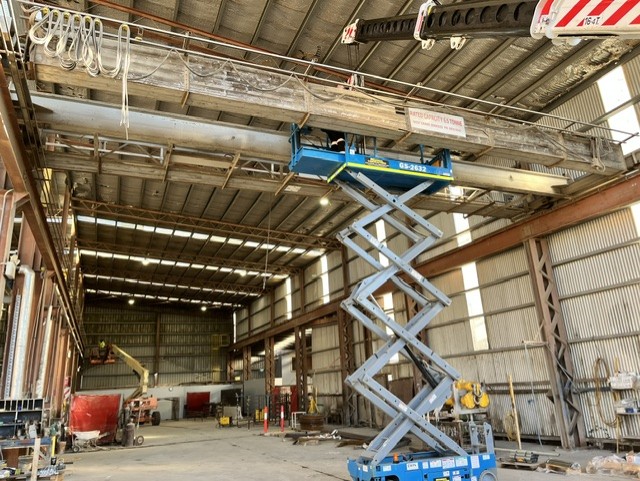
If you’ve just had a Major Inspection on your overhead crane, you’ve probably been handed a report with a list of recommendations — and a decision to make. Do you modernise the crane you’ve got, or is it time to replace it?
It’s one of the most common conversations we have with facility managers and operations teams across Victoria. There’s no one-size-fits-all answer, but there is a clear framework for working it out. Here’s how we help our customers make that call.
Why this decision comes up so often
Every overhead crane in Australia has a Designed Work Period (DWP) under AS2550.1 — typically 25 years for the crane structure and 10 years for mechanical components like the hoist. Once a crane approaches or passes this point, a Major Inspection is required to assess whether it can keep operating safely, and what work (if any) is needed to extend its service life.
That inspection report is usually where the modernisation-vs-replacement question starts. The crane might still be structurally sound, but the hoist, controls, electrics or safety systems may be outdated, unreliable, or no longer compliant with current standards.
What “crane modernisation” actually involves
Crane modernisation means upgrading specific components of an existing crane rather than replacing the whole unit. Depending on the inspection findings, this can include:
- Hoist replacement or upgrade — swapping an ageing wire rope or chain hoist for a modern, more efficient unit
- Control system upgrades — moving from hardwired pendant control to a wireless remote system for better safety and productivity
- Electrical and safety system upgrades — limit switches, overload protection, warning lights and audible alarms brought up to current Australian Standards
- Structural repairs — addressing fatigue, corrosion or wear identified during inspection
- Runway and rail upgrades — where the crane’s structure is sound but the supporting infrastructure isn’t
In many cases, modernisation can extend a crane’s service life significantly for a fraction of the cost of a full replacement — while bringing it up to current compliance and safety standards.
When modernisation makes sense
Modernisation is usually the right call when:
- The structural steelwork is sound and has passed (or will pass) major inspection
- The issues are isolated to specific components — hoist, controls, electrics — rather than the crane as a whole
- Your building and runway infrastructure doesn’t need to change
- You need to minimise downtime — modernisation projects are typically faster than a full replacement and installation
- Budget constraints mean a full replacement isn’t viable right now, but safety and compliance can’t wait
When replacement is the better investment
A new crane is usually the smarter long-term decision when:
- The structural assessment identifies fatigue, corrosion or damage that can’t be cost-effectively repaired
- Your operational needs have changed — different load capacity, span, lifting height or duty cycle than when the crane was first installed
- The cost of modernisation approaches the cost of replacement once you factor in labour, downtime and the age of remaining components
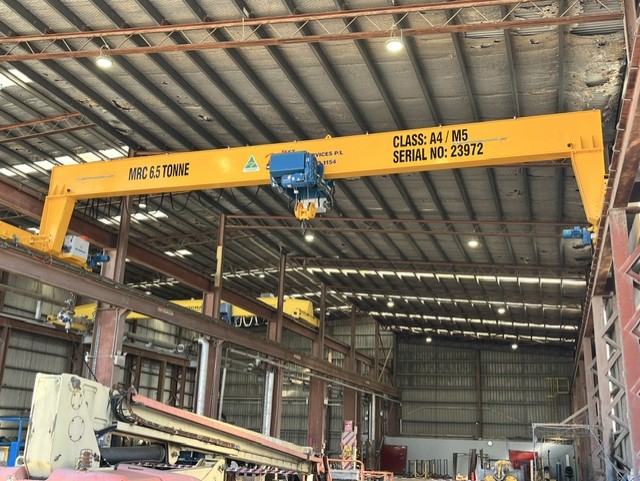
- You’re dealing with repeated breakdowns and rising maintenance costs that are starting to outweigh the cost of a new, Australian-made crane built to current standards
- You want the certainty of a new Designed Work Period rather than ongoing inspection and component replacement on an ageing structure
A simple way to think about it
A useful rule of thumb: if modernisation costs more than roughly 60–70% of a full replacement, or if you’re modernising the same crane for the second or third time within a few years, it’s worth seriously costing out a new crane instead. Below that threshold, modernisation is usually the more efficient path — provided the structural assessment gives it the green light.
This is exactly why we don’t recommend modernisation or replacement off the back of a quick look. Every decision should be backed by a proper Major Inspection report, with input from our in-house engineering team, before you commit either way.
How West Crane Services helps you decide
As Victoria’s largest dedicated crane service and installation team, we’re in a position most crane companies aren’t — we manufacture, install, service and modernise overhead cranes ourselves, so our recommendation isn’t tied to selling you a particular outcome. We’ll give you a straight assessment based on:
- A detailed Major Inspection report referencing the relevant Australian Standards
- A clear cost and downtime comparison between modernisation and replacement
- Engineering sign-off on any structural or design changes
- A scope of work that fits your production schedule, not just our calendar
Whether the right call is a hoist and control upgrade or a full Australian-made replacement crane, we manage the project end-to-end — design, manufacture, installation and commissioning — across our Truganina and Dandenong branches and our wider Victorian, South Australian, Tasmanian, Queensland and New South Wales service areas.
Got a Major Inspection report sitting on your desk?
If you’ve recently had a crane inspection and you’re weighing up your options, talk to our team before you decide. We’ll walk you through the findings, the cost-benefit of modernisation versus replacement, and what compliance timeline you’re working with.